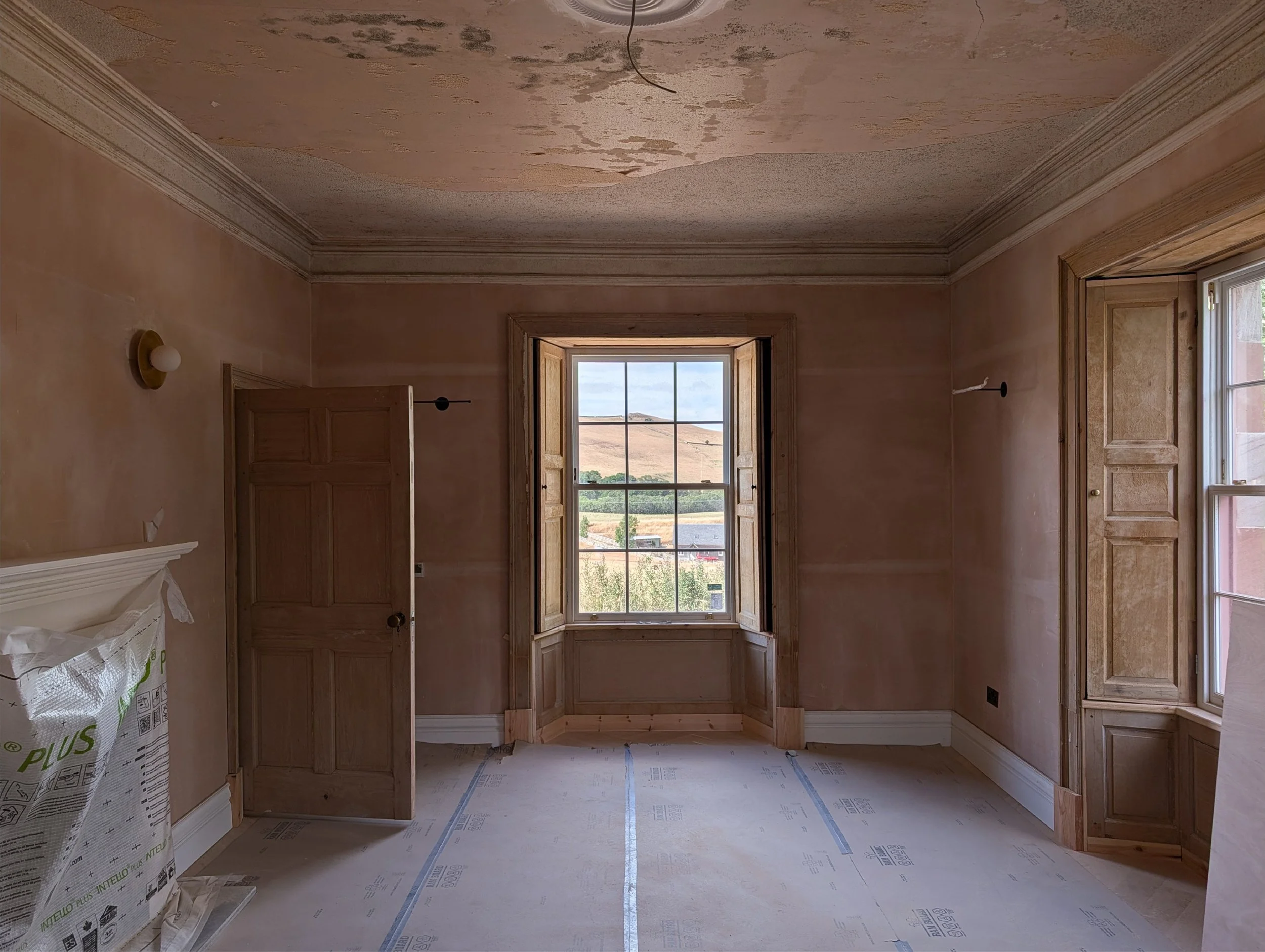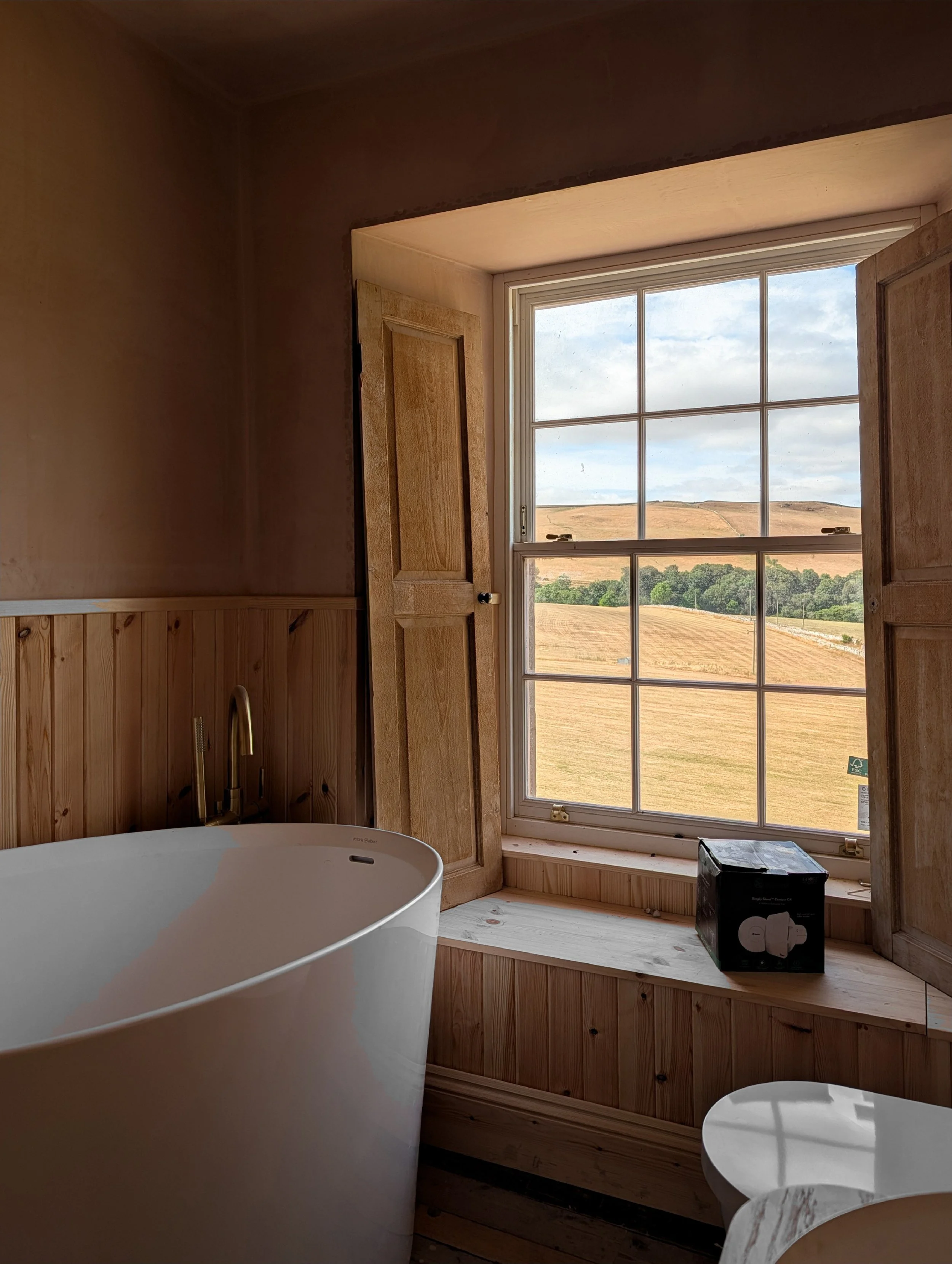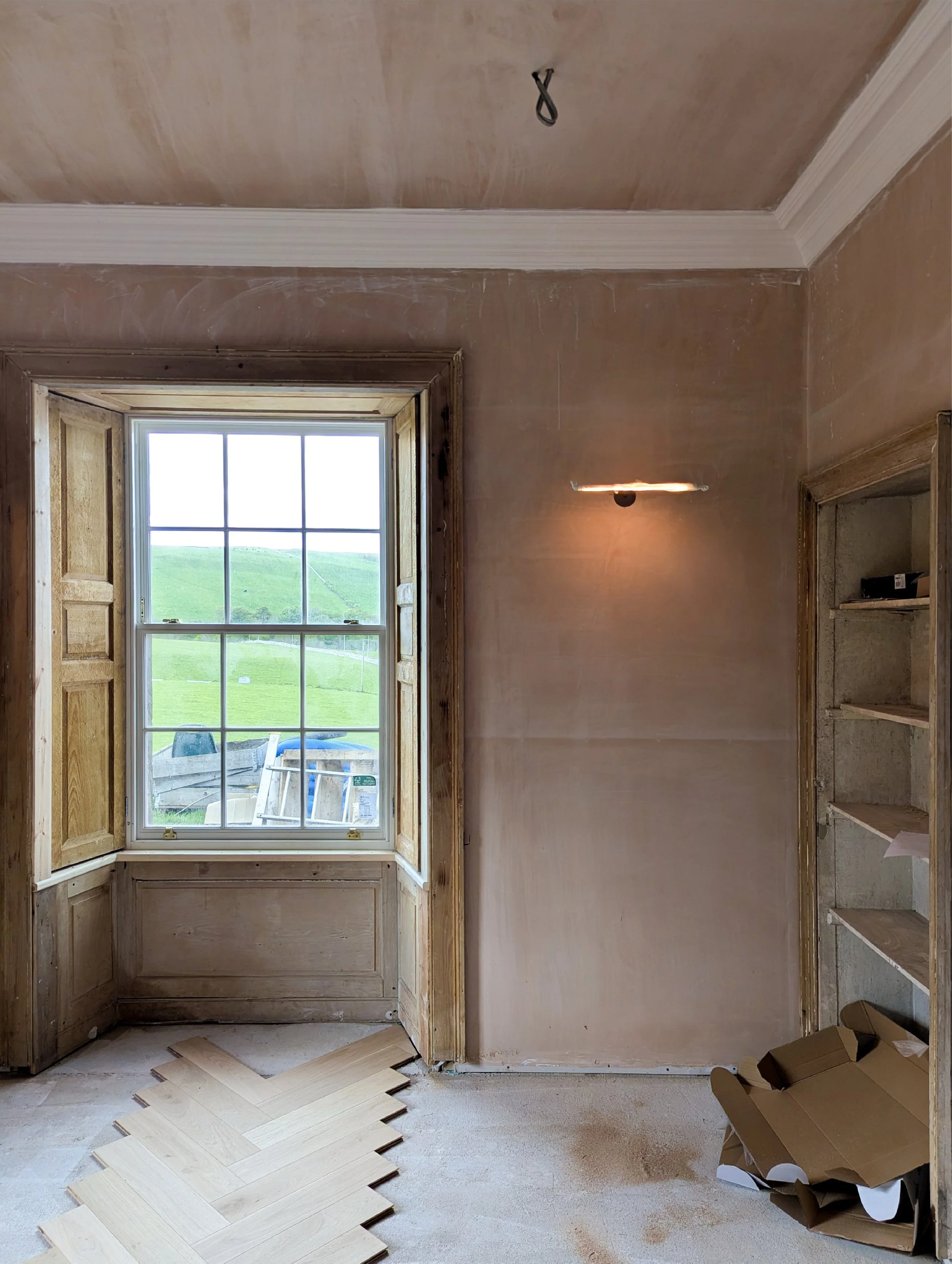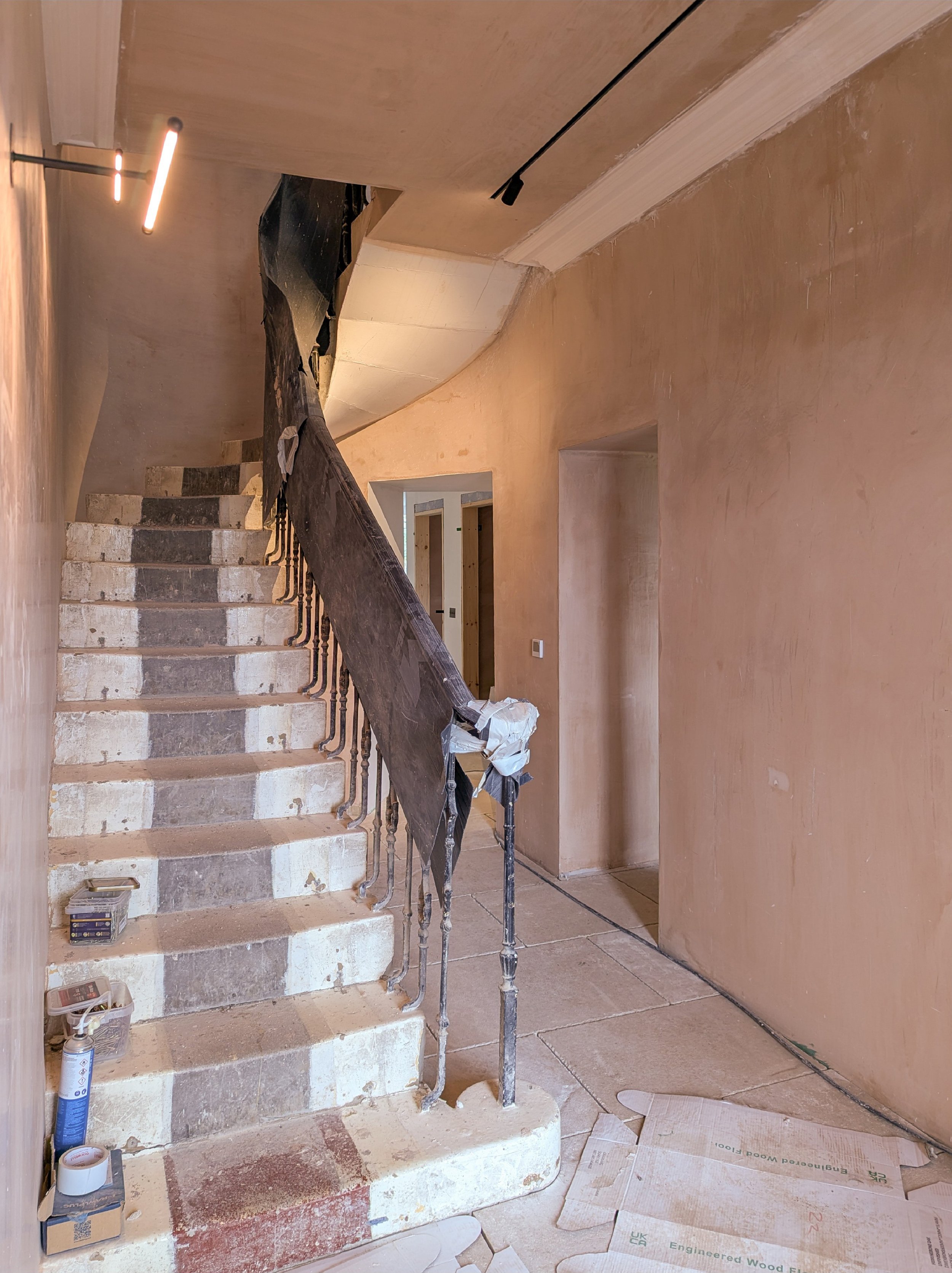
The later stages of construction are less about large structural changes and more about bringing the many layers of a project back together.
Before the finished surfaces appear, there is a substantial amount of work hidden within walls and ceilings: insulation, service routes, new linings and the interfaces between new construction and retained fabric. On refurbishment projects these build-ups have to respond to walls and floors that are rarely straight, while maintaining the proportions of existing rooms, window reveals and decorative details.
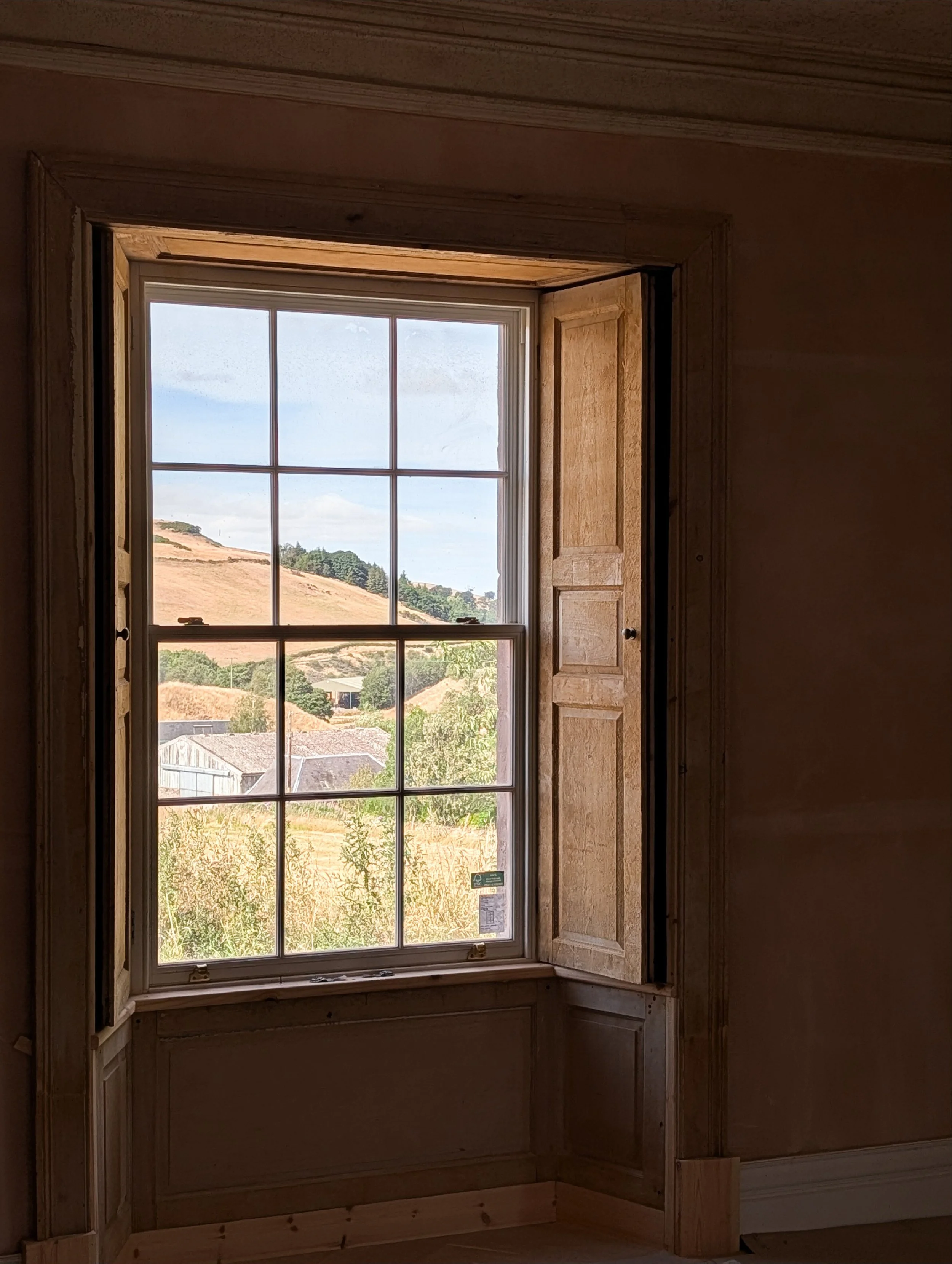
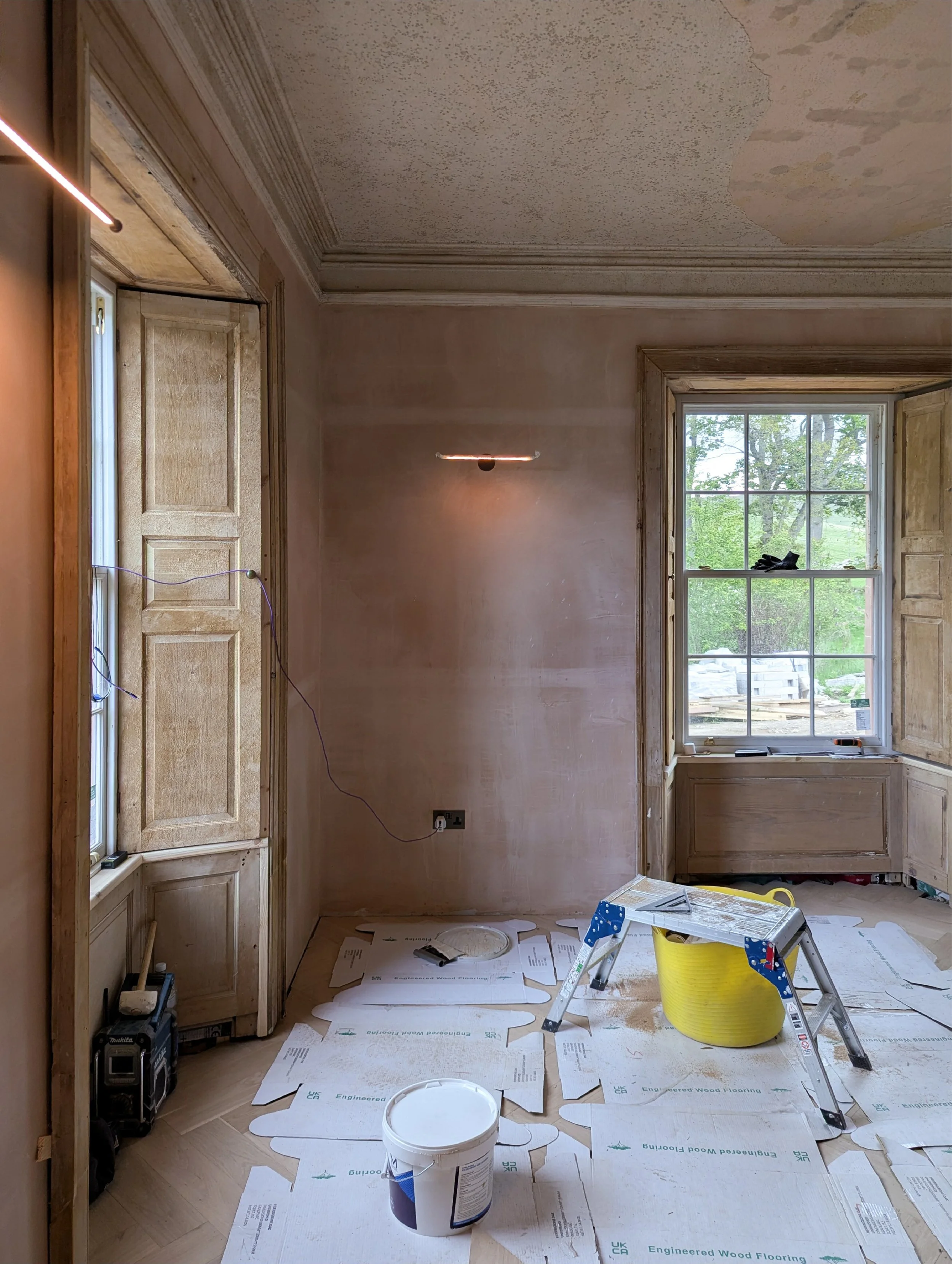
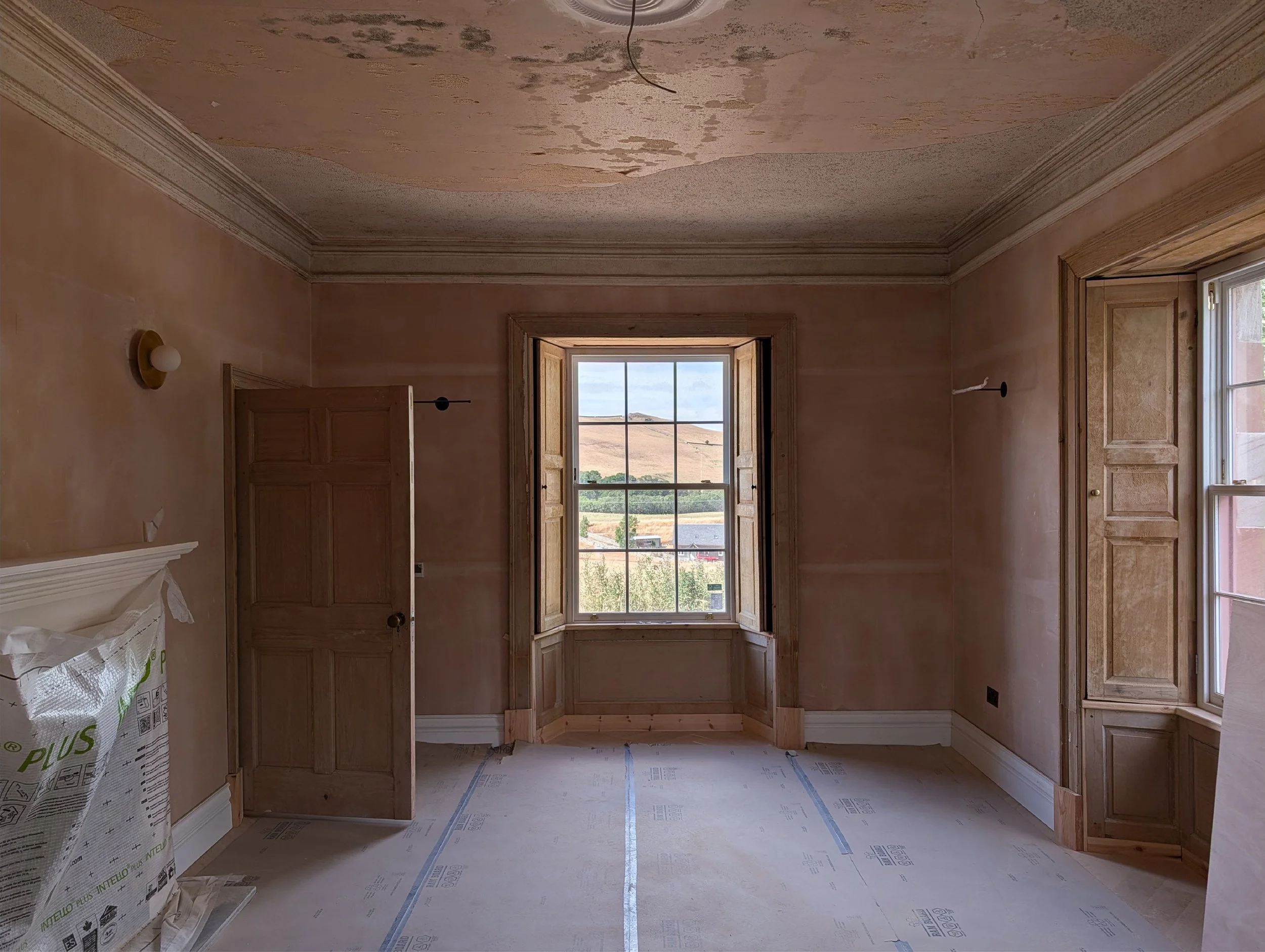
The photographs also show how much character can be retained by resisting the temptation to make everything look new. Old masonry, fireplaces, shutters, panelled reveals and other joinery are repaired and allowed to sit alongside new work with their marks and variations still visible. Lime-based finishes provide a softer background to this retained fabric, while new timber and restrained fittings introduce another layer without overwhelming what was already there.
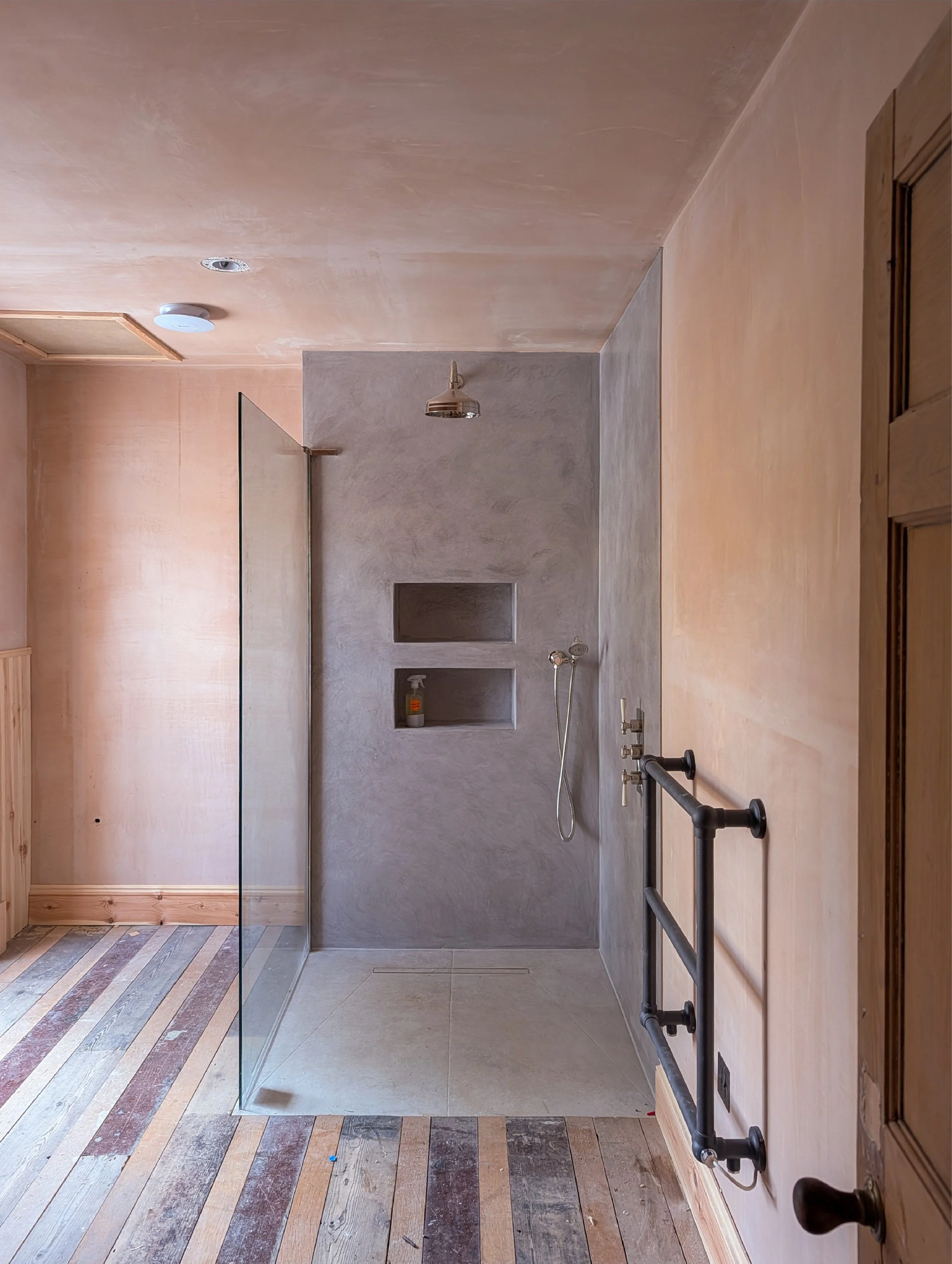
In the wet areas, continuous mineral finishes and simple fittings create calm, robust surfaces. Elsewhere, new floors, repaired joinery and carefully framed views begin to turn what has been a construction site back into a series of rooms.
This is the stage where individual decisions made much earlier — how much fabric to retain, where to insulate, how to repair a window or resolve a junction — begin to read together.
The construction gradually disappears, leaving buildings that still carry evidence of their age while being ready for another period of use.